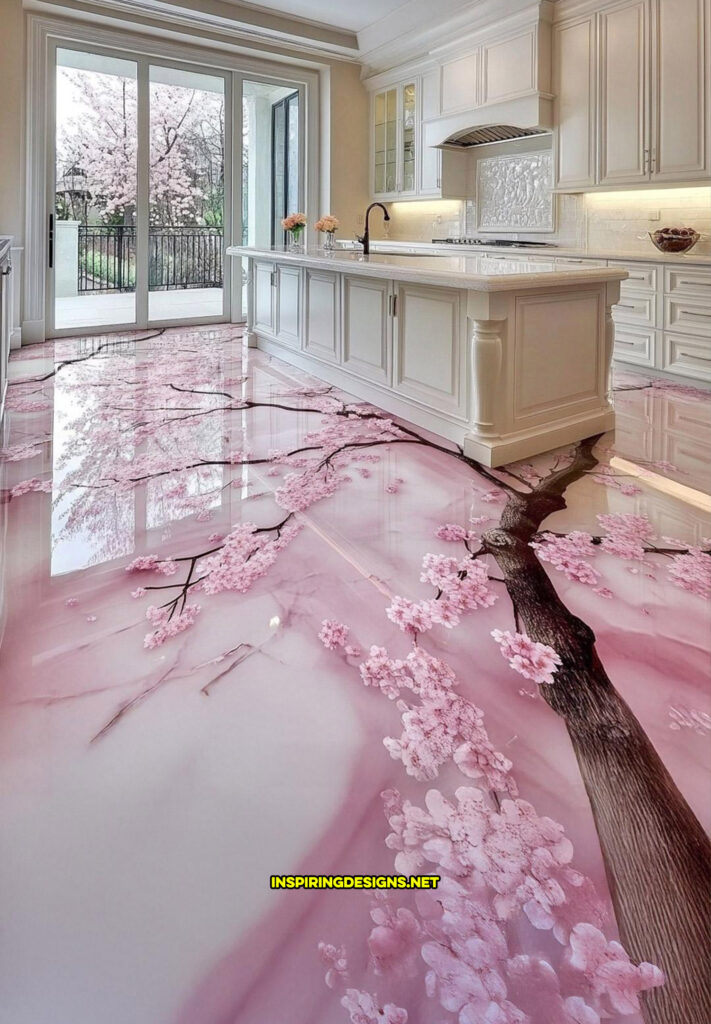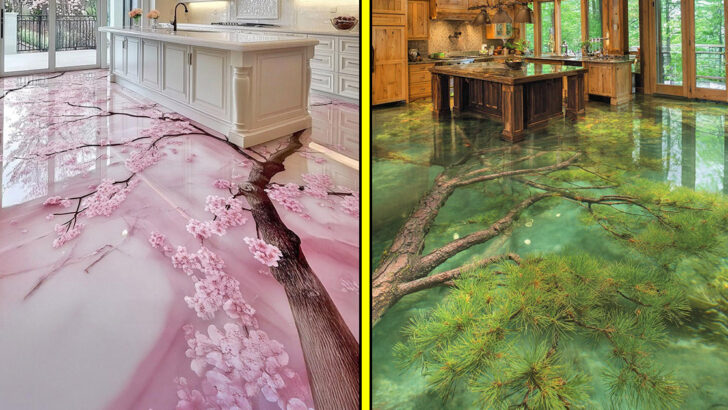
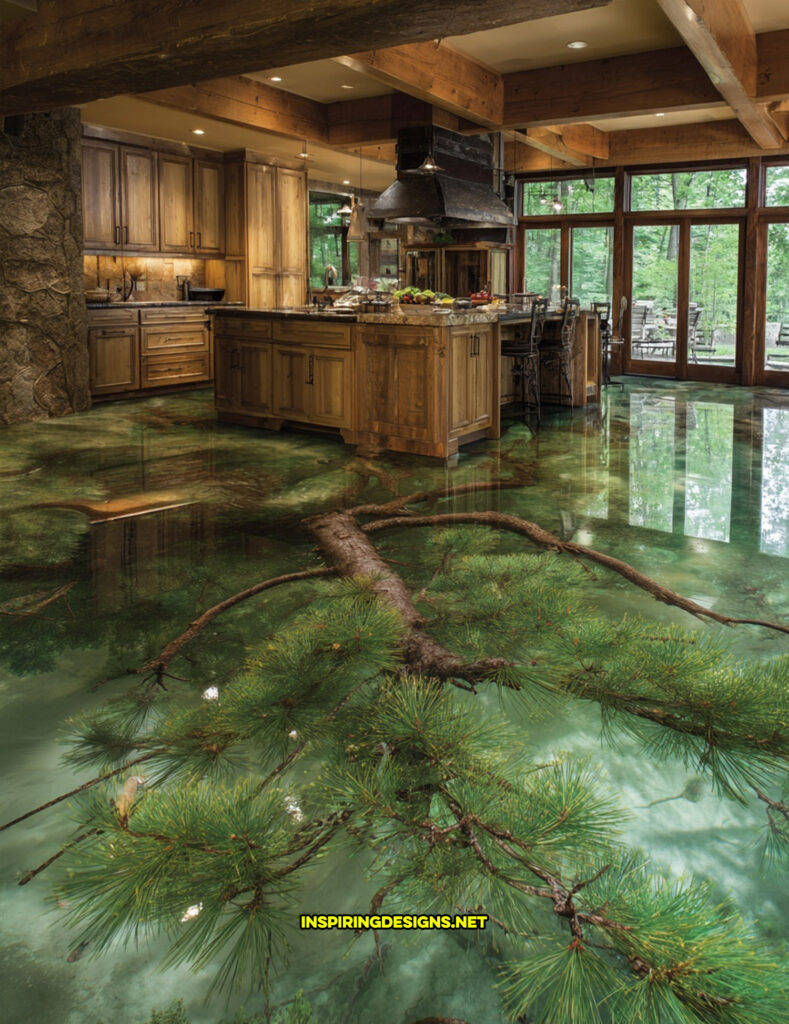
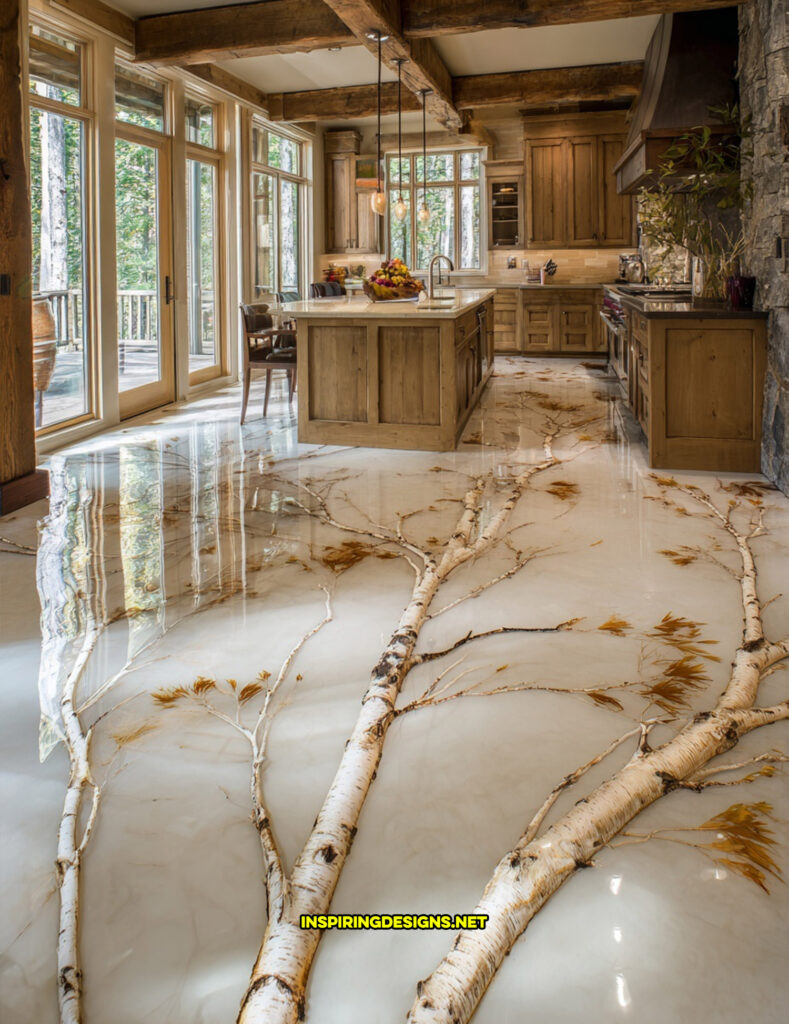
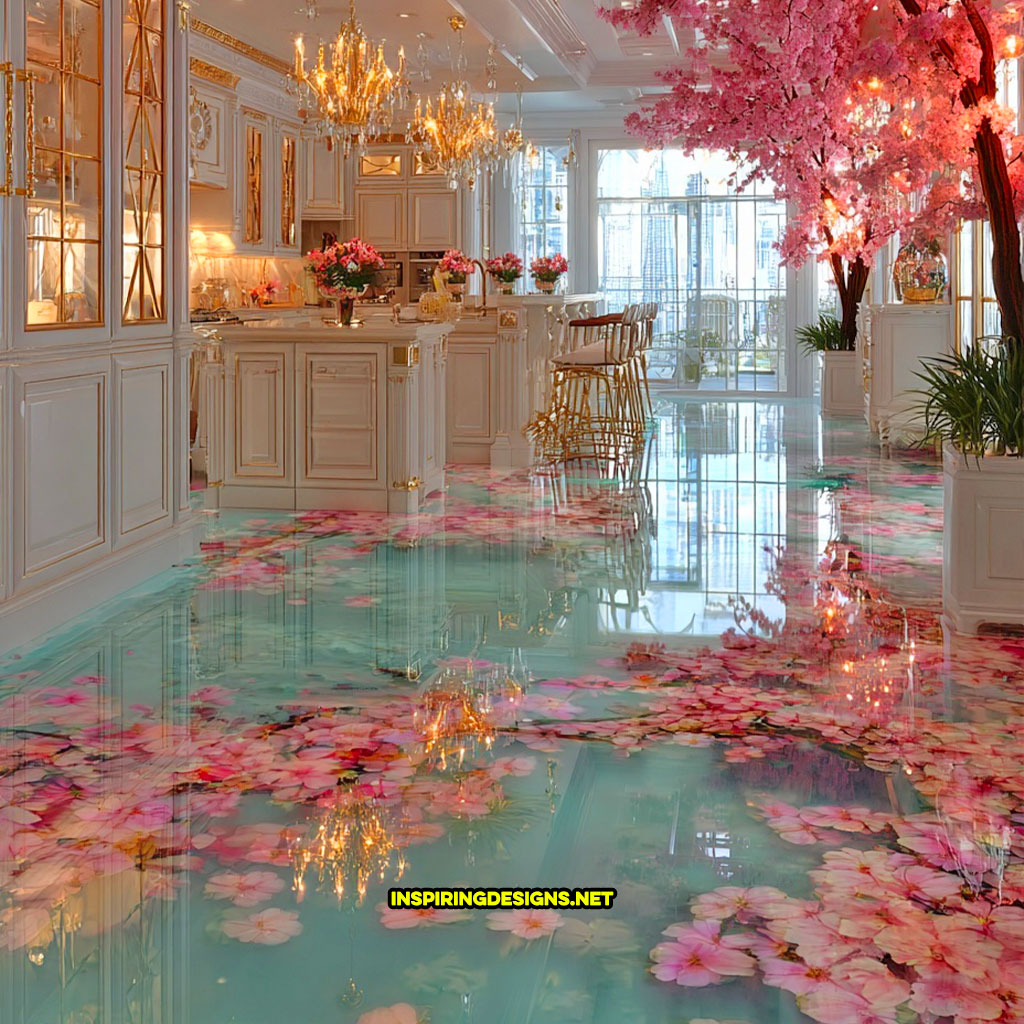
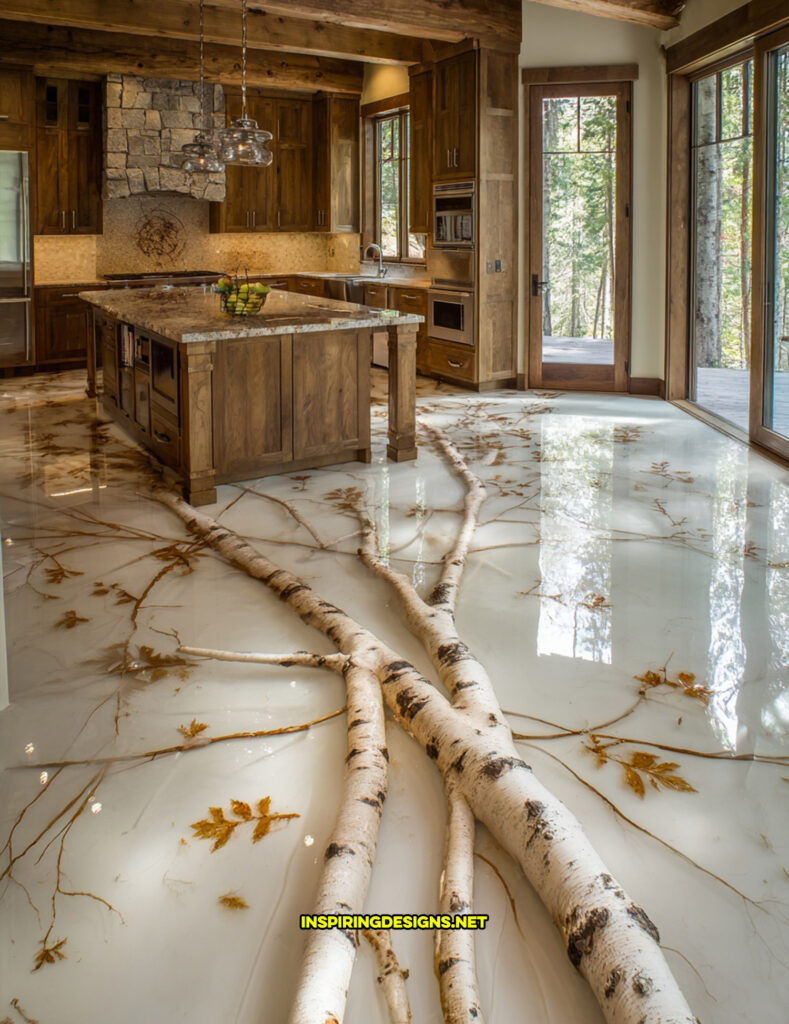
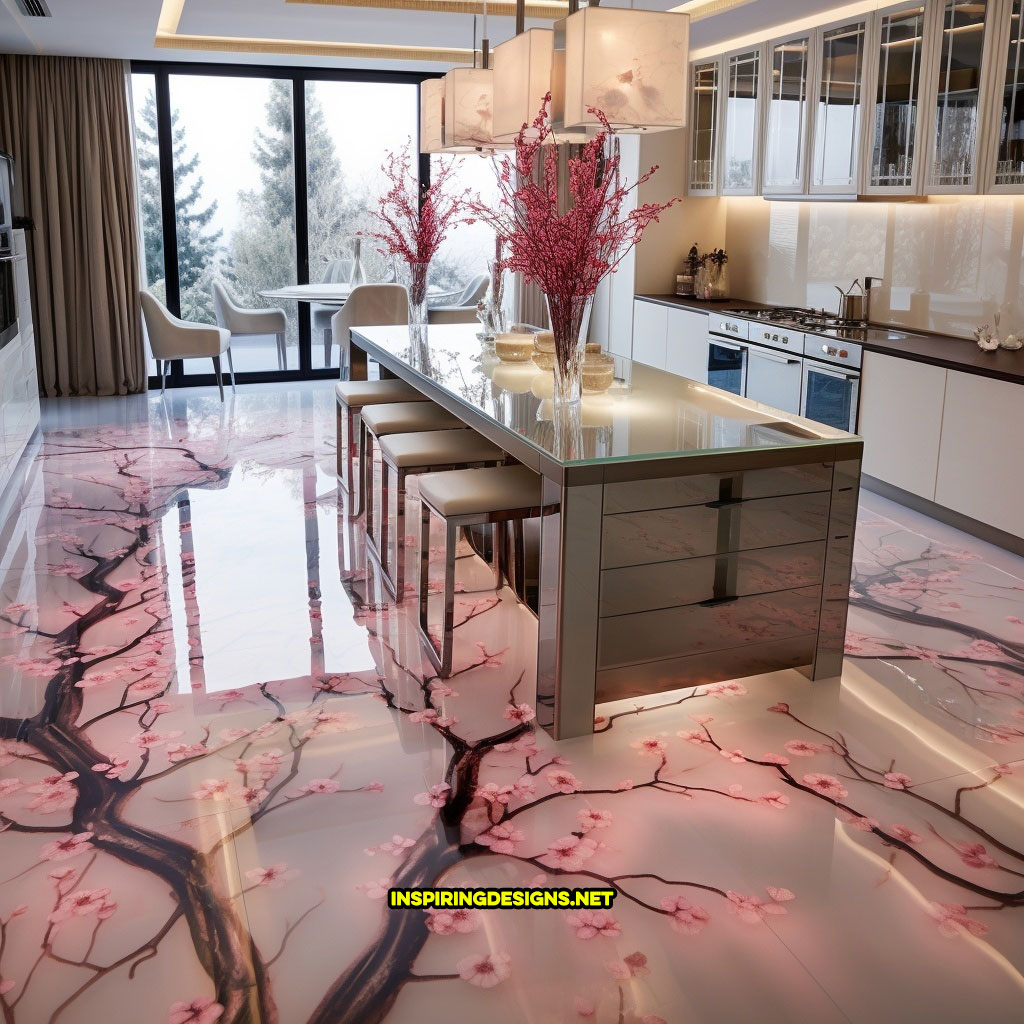
There is something irresistible about a floor that looks like it wandered in from a tranquil woodland. Epoxy tree flooring takes that feeling and freezes it into a glass-smooth surface that can live in kitchens, baths, spas, entryways, and showpiece living rooms. Imagine pale birch branches with tiny golden leaves, pine boughs fanning out beneath a soft green wash, or delicate cherry blossoms drifting across a creamy pink background. That is the magic of epoxy tree floors.
Below is a complete guide to help you decide, design, install, and care for your own tree branch epoxy flooring. Expect practical details, creative ideas, and a few fun turns of phrase. Dirt from actual forests stays outside. Calm from actual forests moves in.
What Is Epoxy Tree Flooring
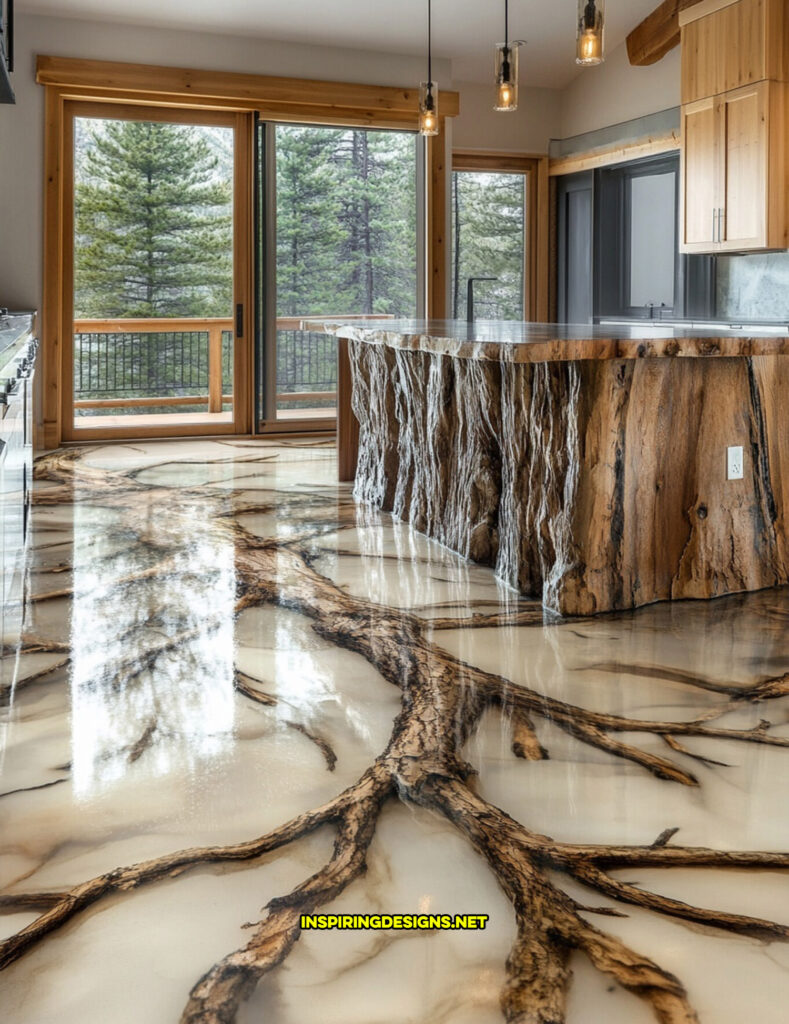
Epoxy tree flooring is a multi-layer resin system that permanently encases natural elements like branches, bark, pine needles, blossoms, and leaves beneath a crystal-clear topcoat. Designers create a composition on a sealed base layer, then build depth with several pours of transparent and tinted resin. The result is a durable, waterproof, 3D floor that looks like a suspended forest scene under your feet.
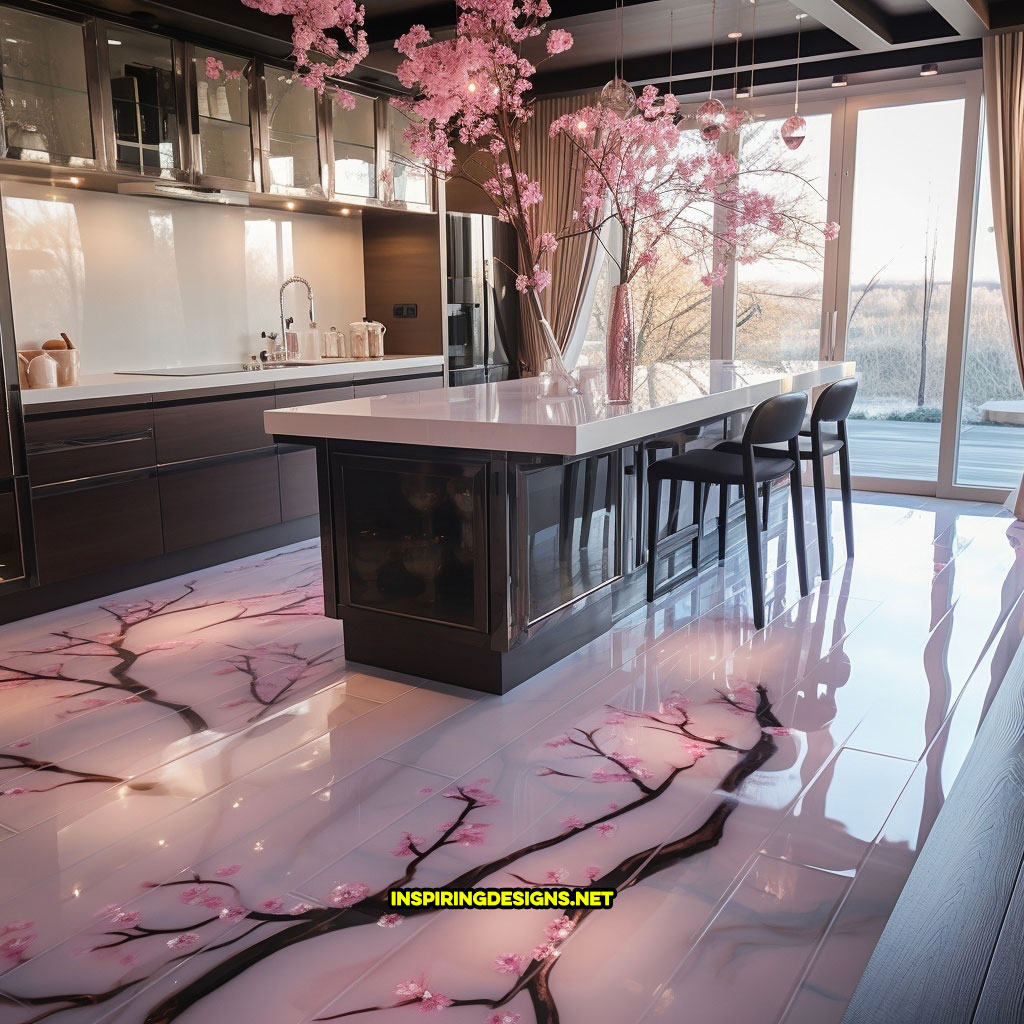
Common terms you will see used interchangeably include tree branch epoxy flooring, 3D epoxy tree floors, and resin tree floors.
Why Homeowners Love It
- Immersive look that turns a room into an art piece
- Durable and waterproof for kitchens, bathrooms, spas, and mudrooms
- Seamless surface with no grout lines to trap dirt
- Customizable colors, species, density, and background effects
- Low maintenance with simple cleaning and no waxing
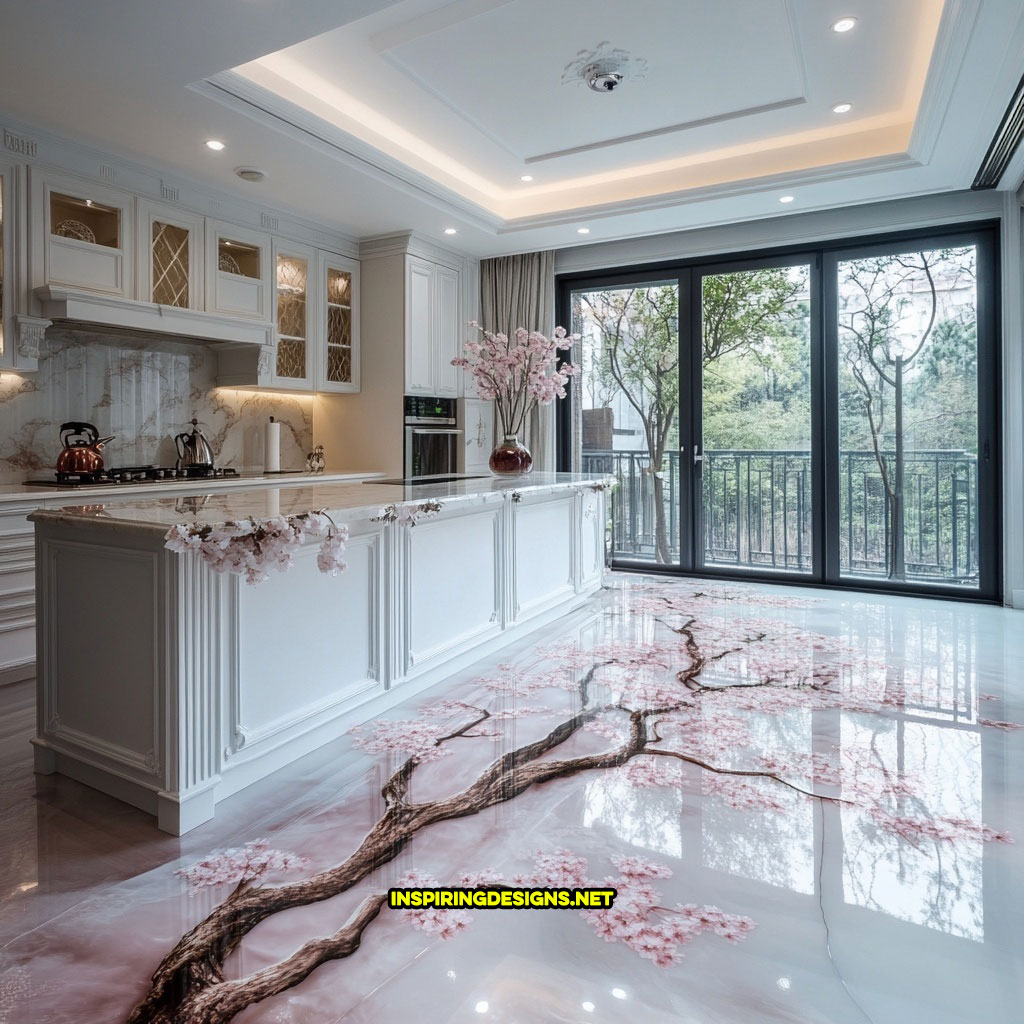
Where Epoxy Tree Floors Shine
- Kitchens with big windows where natural light amplifies depth and reflection
- Spa and wellness rooms where the calm vibe matters as much as the cleanability
- Bathrooms and wet areas thanks to moisture resistance
- Entryways that deserve a drop-the-jaw moment
- Boutique retail, salons, and hospitality when you want decor that doubles as brand storytelling
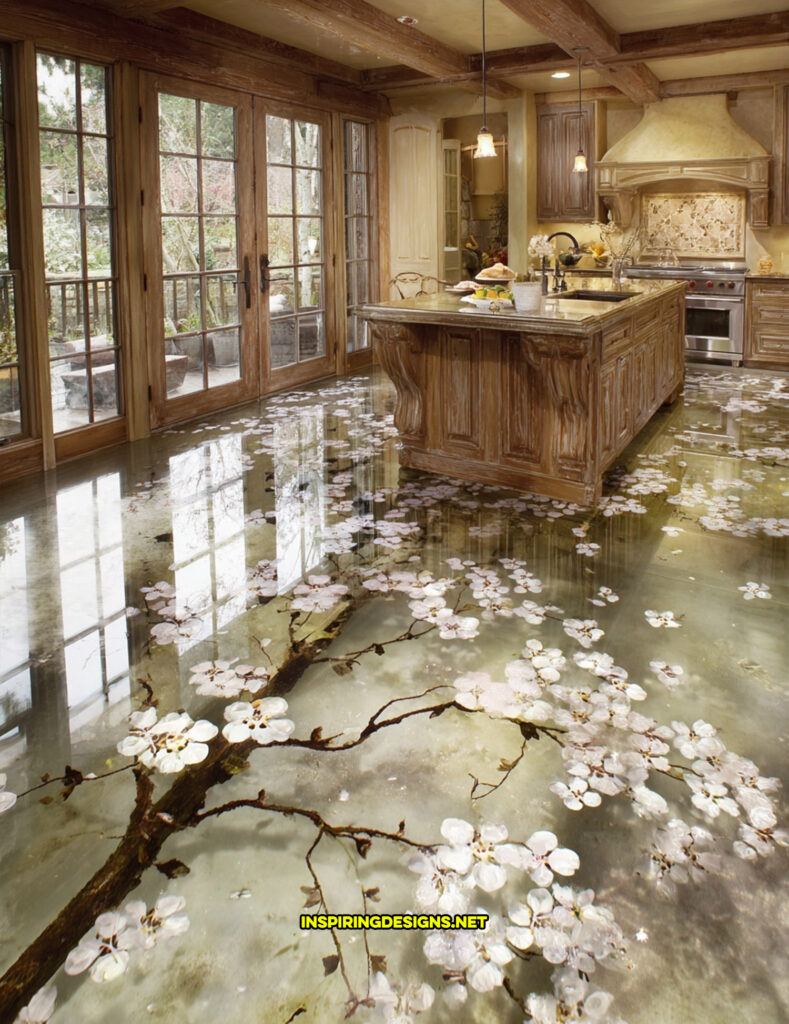
Pricing varies by location, installer expertise, and the number of layers and embedded elements. As a planning range:
- Standard decorative epoxy floors: roughly 8 to 18 dollars per square foot
- 3D and nature-embedded epoxy tree floors: often 15 to 35 dollars per square foot
- Complex museum-grade installations: can exceed 45 dollars per square foot
Expect higher costs for dense compositions, custom color work, thicker pours, and intricate room shapes.
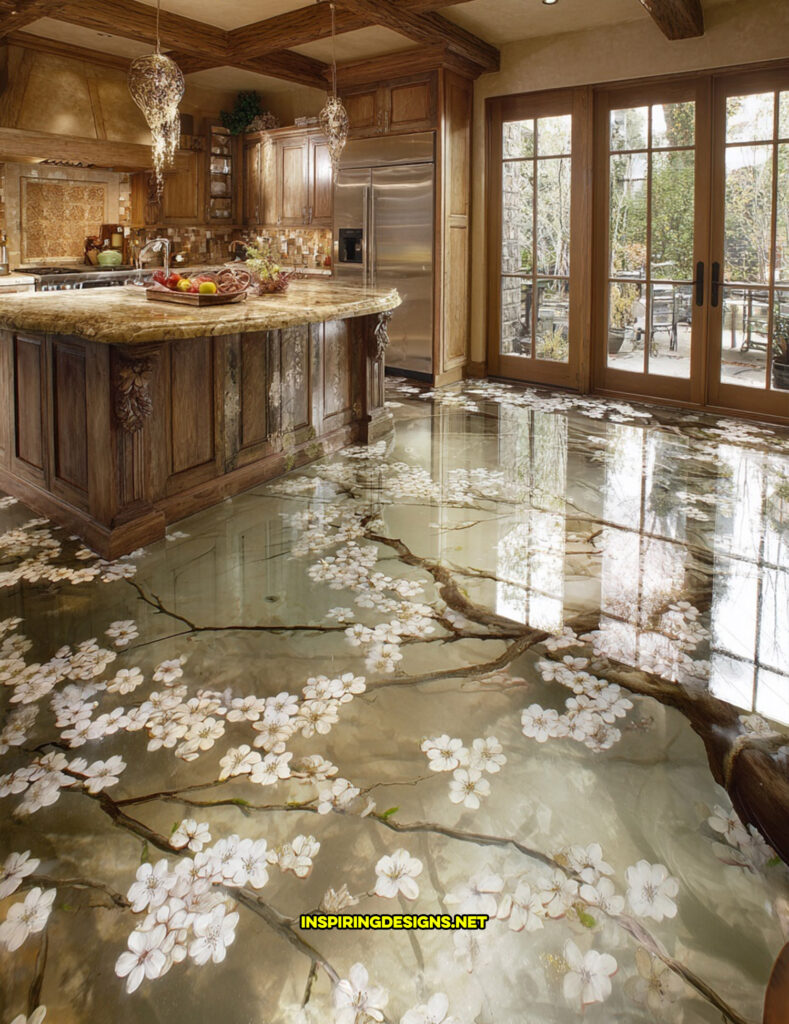
Installation Considerations
- Moisture testing for concrete slabs is a must to prevent bubbling or delamination.
- Movement joints need special treatment so the artwork remains uninterrupted yet the slab can move naturally.
- Lighting plan matters. LED strips under toe kicks, pendants, and big windows make the depth read beautifully.
- Furniture protection with felt pads keeps the glossy surface pristine.
- Pets and kids are welcome. The floor is tough, and the art sits safely below the topcoat.
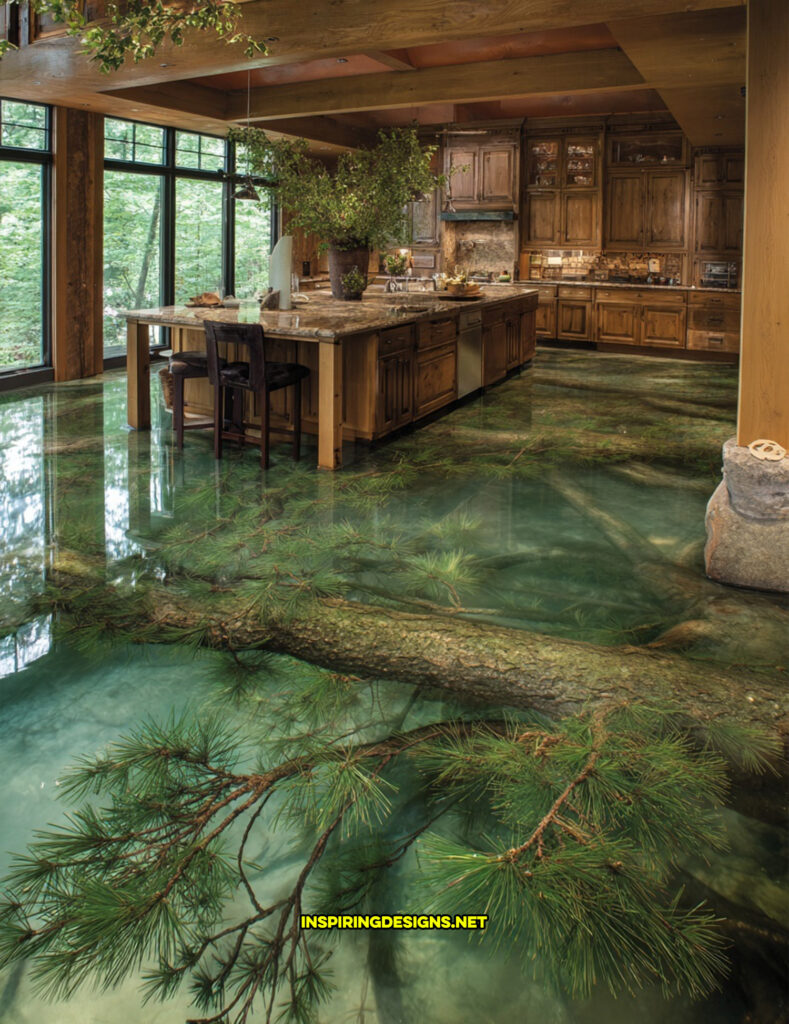
Style Pairings That Just Work
- Modern rustic: knotty wood cabinets, honed stone, and warm metals calm the glimmer and keep the space grounded.
- Japandi and minimal: pale woods, clean lines, and one sculptural tree scene for a meditative look.
- Mountain or lake homes: evergreen compositions that echo the view outside.
- Classic white kitchens: cherry blossoms on a blush or pearl ground pair beautifully with shaker doors and brass hardware.
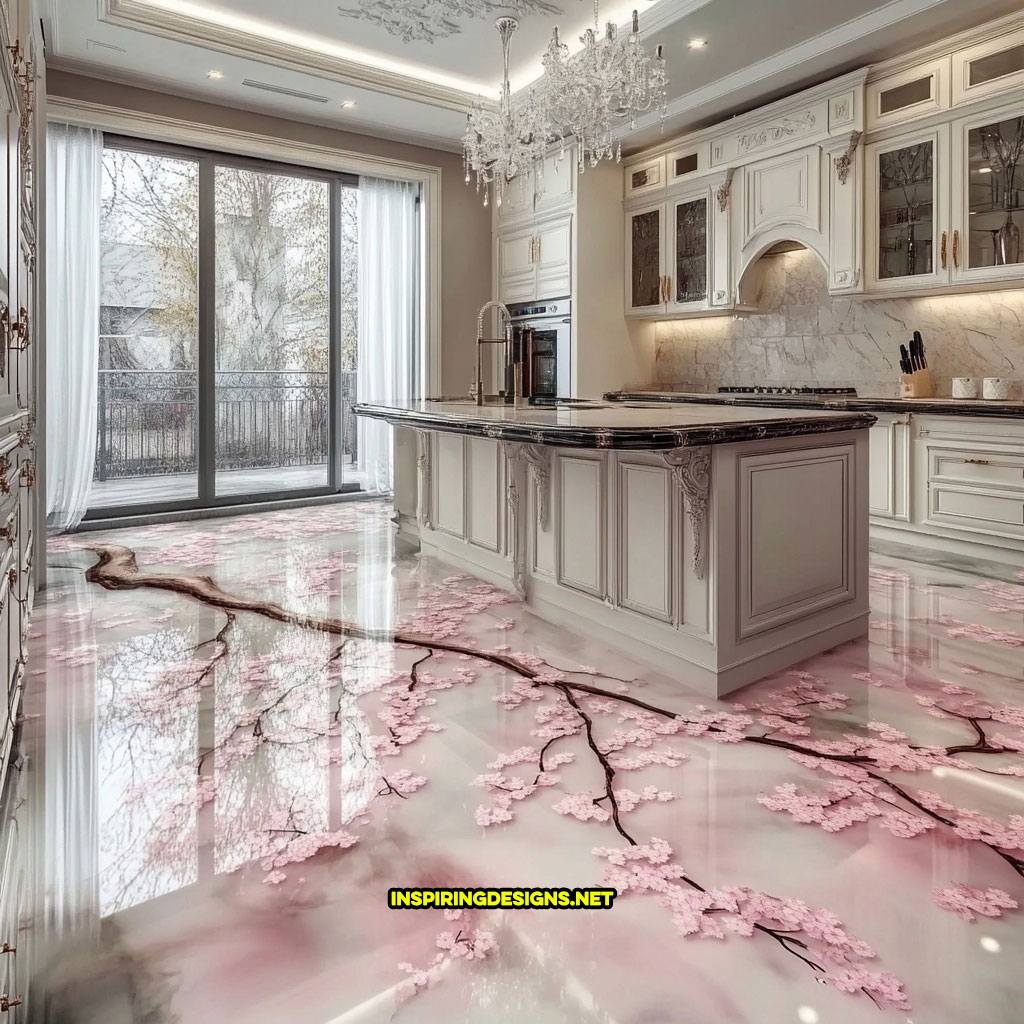
Maintenance Made Simple
- Sweep or vacuum with a soft brush to remove grit.
- Mop with a neutral, non-abrasive cleaner and warm water.
- Use felt pads under chair and table legs.
- Place entry mats at doors to catch the outdoors before it joins the indoors.
- For micro-scratches, a professional buff and recoat can refresh the shine after years of use.
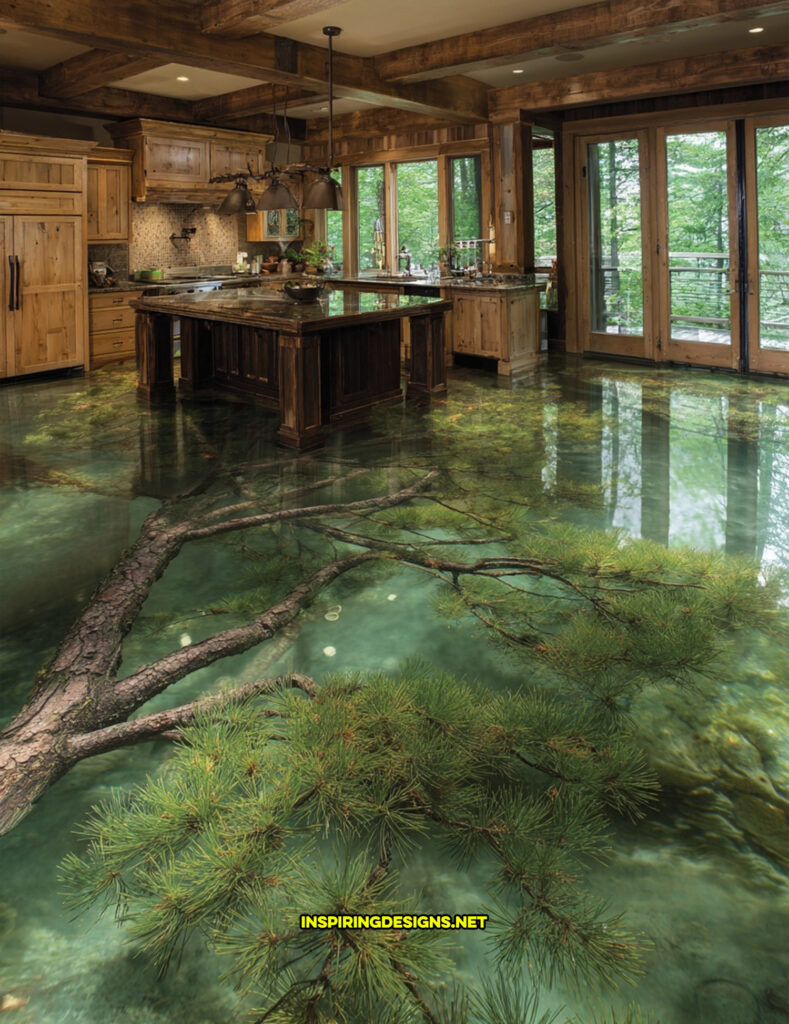
Safety And Indoor Air Quality
Modern epoxy systems off-gas primarily during application and early cure. Reputable installers use low-VOC, professional-grade materials and maintain ventilation. After curing, the surface is inert, non-porous, and easy to keep hygienic. If indoor air quality is a top priority, ask your installer about ultra-low-VOC hardeners and waterborne urethane topcoats.
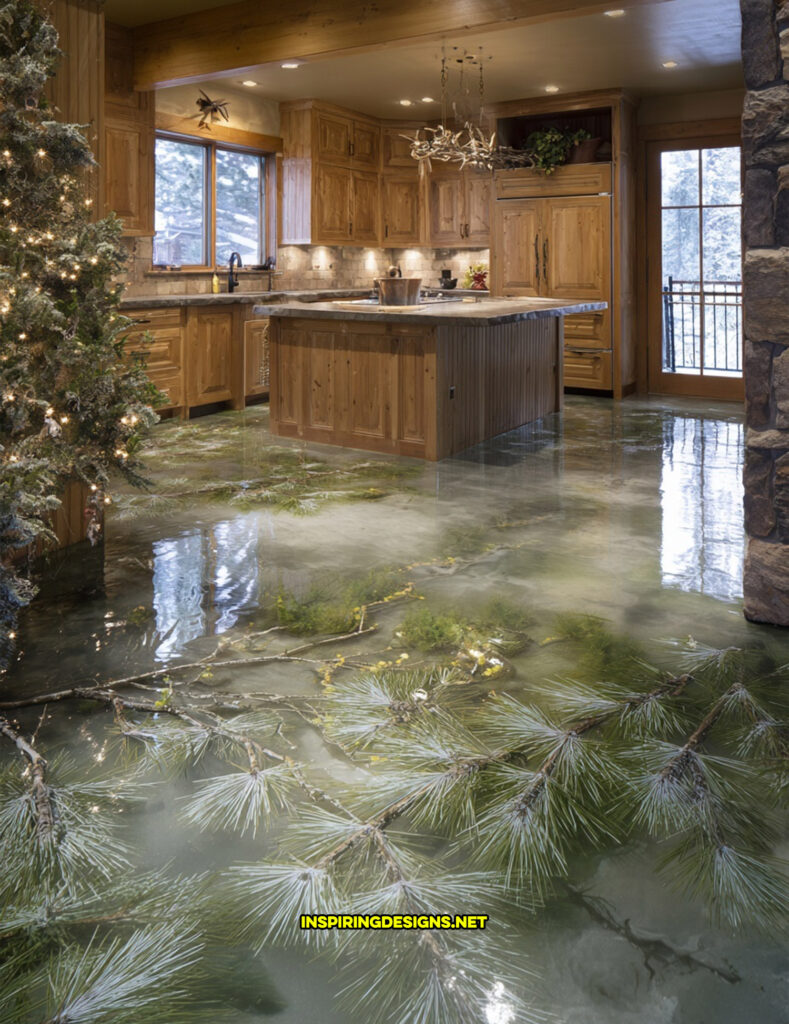
Customization Ideas To Make It Yours
- Hidden signature: a tiny carved heart, an initial, or a date subtly tucked among the branches
- Gradient backgrounds that shift from pearl to soft green or pale gray to blush
- Seasonal nods like a few amber leaves near a doorway or a gentle scatter of petals toward a soaking tub
- Integrated lighting at thresholds to create a slight shimmer across the surface at night
- Matte topcoat for gallery calm if your room gets intense daylight
Comparing Options: Epoxy Tree Floors vs Alternatives
- Polished concrete is industrial-chic and durable, yet lacks the 3D artwork and water-clear depth of epoxy tree flooring.
- Luxury vinyl is budget-friendly and easy to DIY, but it cannot replicate the realism of preserved natural elements.
- Tile and stone offer pattern and texture, yet require grout that needs ongoing care and cannot create the illusion of suspended branches.
- Hardwood brings warmth and can be refinished, but it is not ideal for wet zones and does not deliver the biophilic art effect.
If your goal is immersive nature underfoot with practical performance, epoxy tree floors win.
How To Choose The Right Installer
- Review a full portfolio of nature-embedded projects, not just generic epoxy work.
- Ask about element preservation, UV strategy, and topcoat options.
- Confirm moisture mitigation and warranty details in writing.
- Request a mock layout on the actual subfloor or a scaled board so you can approve the composition before pouring.
- Read recent client reviews focused on communication, schedule accuracy, and post-install support.
Will the wood rot inside the resin
No. Branches and blossoms are dried and sealed before embedding, then fully encapsulated in resin.
Can I choose matte instead of high gloss
Yes. A matte or satin urethane topcoat can be applied over the cured system.
Is it slippery
In residential use the floor performs similarly to polished stone. Installers can add micro-grit for areas where extra traction is desired.
Can radiant heat be used
Yes. Epoxy tree flooring works well over hydronic or electric radiant systems when installed to manufacturer specs.
How long does it last
With normal care and an occasional recoat many years down the line, expect long service life comparable to other premium seamless floors.
The Takeaway
Epoxy tree flooring is biophilic design you can walk on. It marries the calm of forests with the strength of industrial-grade resin, creating rooms that feel grounded, airy, and quietly magical all at once. If you want a surface that handles splashes, muddy boots, kids, and pets while also starting conversations, tree branch epoxy flooring belongs on your shortlist.
Ready to bring the outdoors in without inviting the squirrels
Choose your branch species, pick a color story, and work with a specialist who treats your floor like the art it is. Your home will thank you every time the light hits the surface and your living room looks like it is holding a secret stream.
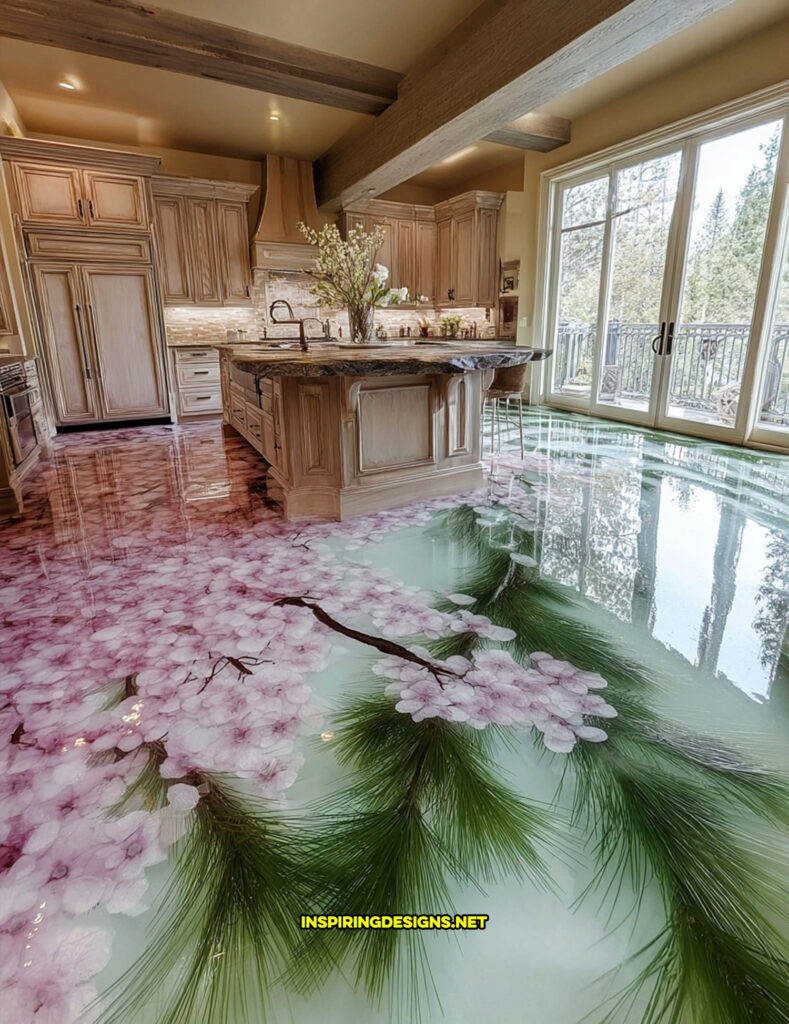
Lets check out some pros vs cons to see if these stunning epoxy floors are right for your home!
| Pros | Cons |
|---|---|
| Showstopping 3D, nature inspired look | Higher cost than standard flooring |
| Seamless and waterproof surface | Professional installation strongly recommended |
| Low maintenance, no grout lines | Repairs require skilled blending to match art |
| Durable topcoat resists scratches and stains | High gloss can show scuffs in bright light |
| Customizable species, colors, and layouts | Lead time for design and curing |
| Works well in kitchens, baths, and spas | Not a good DIY project for beginners |
| Compatible with radiant floor heating | Slab moisture must be tested and mitigated |
| Easy to clean with neutral cleaners | Heavy furniture needs felt pads or protectors |
| UV resistant finishes available | Prolonged harsh UV may still require recoats over time |
| Unique, one of a kind results | Resale tastes vary since designs are highly personal |